Content Layer
Case write-ups, case background, legal approaches, outcomes, and reusable working methods.
Projects / AI-Assisted Business Operations Infrastructure / Case-Library Production Agent
AI Workflows / Business Systematisation
Designed around the successful-case documentation workflow of a family-law services team, this system connects case write-ups, document templates, anonymised supporting materials, quality checks, and retention candidates into a reusable case-library production pipeline.
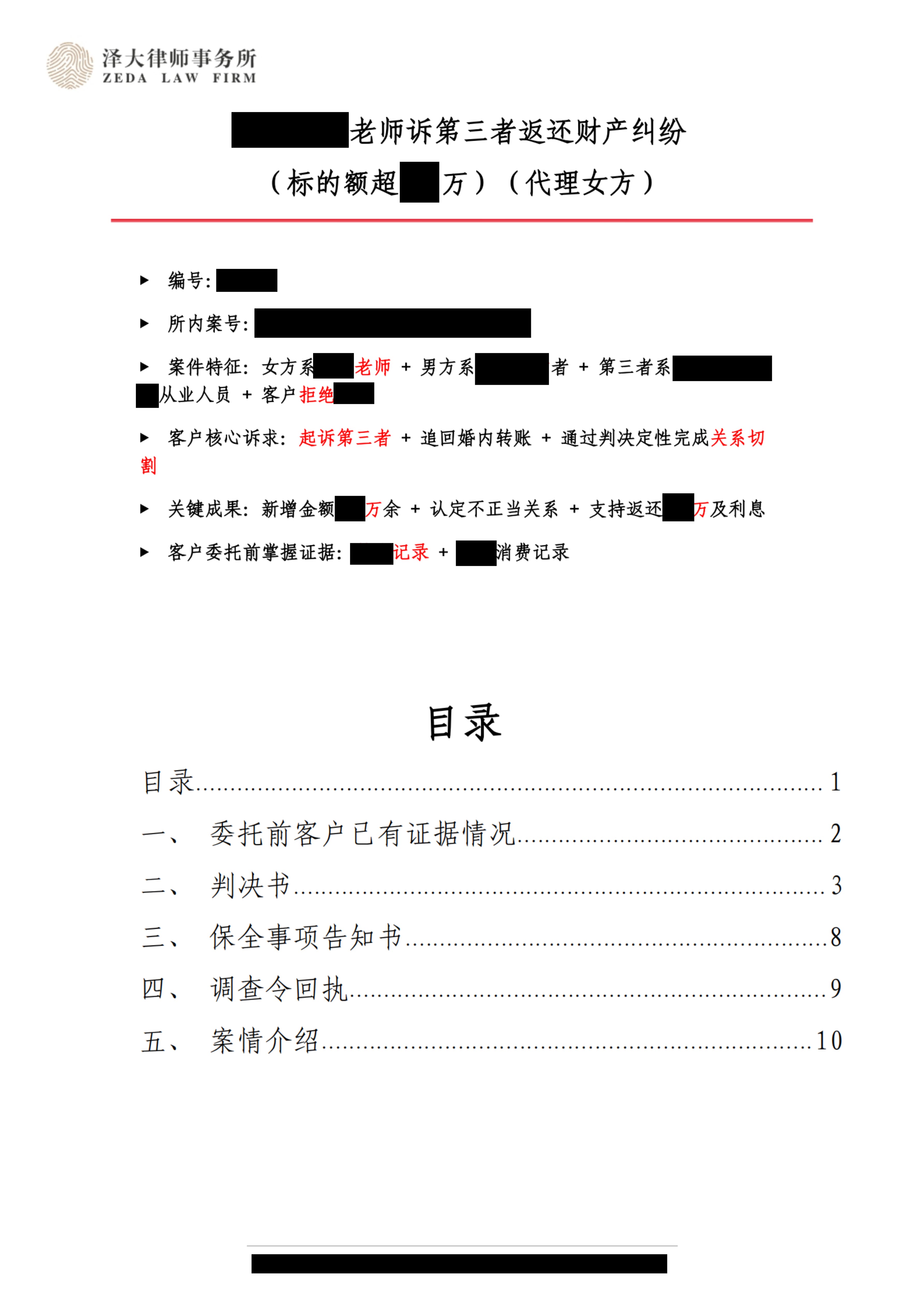
Case write-ups, case background, legal approaches, outcomes, and reusable working methods.
Formatting rules for the cover, headings, contents page, body structure, fonts, and page numbers.
Processed judgments, investigation orders, case-background materials, evidence, and other supporting documents.
Checks covering the contents page, heading hierarchy, material order, anonymisation boundaries, and readability.
Cases are retained as reusable assets for the case library, legal working methods, customer personas, and future content topics.
Able to turn one-off case materials into reusable case-library assets.
Able to convert formatting, contents-page structure, material order, and quality checks into reusable rules.
Able to distinguish AI-generated candidates from human verification of facts, avoiding the use of AI output as an unchecked final result.
Able to identify repetitive work and reduce rework through templates, placeholders, and structured checks.
The value of the Case-Library Production Agent is not that it allows AI to write an entire case study automatically. Its value lies in turning case production into a controlled workflow: content is organised first, the template then provides the structure, materials are inserted through placeholders, outputs can be checked, and only then are they retained in the knowledge base. This process showed me that a valuable AI workflow does more than generate a piece of text once. It turns experience and completed work into reusable business assets.